


The history of the Nordic countries has its share of settled facts and its share of stubborn puzzles. A missionary sails to a trading town called Birca around the year 830, and nobody wrote down precisely where it was. A king is shot through the head in a siege trench in 1718, and for three centuries people have argued about which side fired. A fortress built to be the Gibraltar of the North hands itself over in 1808 without an assault. A farmer in Minnesota pulls a carved stone from under a tree in 1898, and a debate begins that has never quite gone away.
The essays in this section take up questions of that kind. Each one starts from the work of Carl O. Nordling, the Finland-Swedish architect and independent researcher who wrote on many of these topics between the 1950s and the early 2000s, and each sets his argument beside the view that specialists hold today. Some of his conclusions have been absorbed into the mainstream, some remain open minority positions, and some have been rejected outright. The pages say which is which.
What the essays cover
Two essays deal with the Viking age and its aftermath. The first looks at Ansgar's mission to the Swedes and Nordling's proposal that the Birca of the medieval chroniclers lay on Åland, not on the island of Björkö in Lake Mälaren, where archaeologists place it. The second turns to North America and the Kensington runestone, which Nordling once defended as a possible fourteenth-century document and which runologists now regard as a modern creation.
Two essays concern Sweden's wars. The death of Charles XII at Fredriksten in 1718 is examined through the ballistic arguments Nordling used to support the assassination theory, together with the counter-arguments that leave most historians undecided or inclined toward an enemy bullet. The surrender of Sveaborg by Vice-Admiral Carl Olof Cronstedt in 1808, a turning point in the war that cost Sweden its eastern half, is read through Nordling's case that the fortress could have held.
Three essays concern Finland and the peoples who live there. One examines the names of Finland's historic provinces, from Nyland and Uusimaa to Häme and Satakunta, and the competing explanations of where they come from. Another considers the genetics and language of the Saami, including Nordling's idea of a vanished "Para-Saami" population, in light of later DNA and substrate research. The last discusses his attempt to estimate, from blood-group data, the ancestral components of Finns and Finland-Swedes, and compares it with what genome-wide studies have since found.
How to read them
These are essays, not reference articles. They follow an argument, weigh it, and point out where the evidence is thin. Numbers and dates are given where they are secure and left out where they are not. Readers who want the wider story of the Swedish-speaking population of Finland will find it in the series on the Finland-Swedes, and the twentieth-century wars are treated in the section on the Second World War. A portrait of the author whose work runs through all of this is on the page about Carl O. Nordling.
Questions and answers
What period of Scandinavian history do the essays cover?
They run from the ninth century to the early nineteenth. The earliest essay follows Ansgar's mission to the trading town of Birka around 830, and the latest deals with the surrender of the Sveaborg fortress in 1808. Two essays on population history, about Finland and about the Saami, reach further back into prehistory and draw on modern genetic studies.
Why is the death of Charles XII still debated?
The king was shot in the head in a trench at Fredriksten in Norway in November 1718, at night, during a siege. Whether the bullet came from the Norwegian defenders or from someone on the Swedish side has been argued ever since. The remains were examined several times, most recently in 1917, without a result both camps accept.
Is the Kensington runestone considered authentic?
The stone was reported by a Swedish immigrant farmer in Minnesota in 1898, and its inscription describes a journey of Norsemen in 1362. Runologists and linguists almost all regard it as a nineteenth-century creation, pointing to word forms and runes that do not fit the fourteenth century. A smaller group of researchers still defends it, and the essay sets out their arguments.
How do these essays relate to the series on the Finland-Swedes?
They overlap on several points. Sveaborg, the province names and the genetic history of Finland's population concern the same coast and people described in the Finland-Swedish series. That series follows the language group as a community, while the essays here take single events or questions and examine the evidence for each one in more depth.
Essays in this collection
-
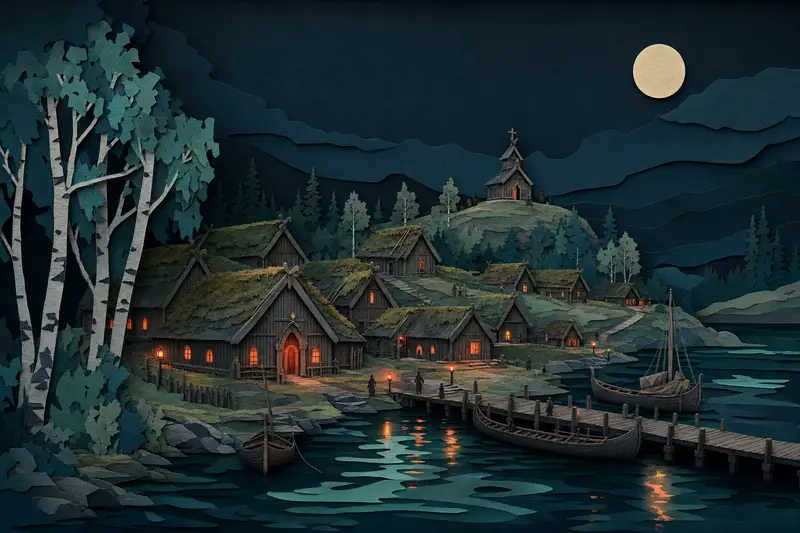
Ansgar and the location of Birca
Ansgar reached a trading town called Birca around 830. Carl O. Nordling read the Latin sources and argued for Åland; archaeology points to Björkö.
6 min read -
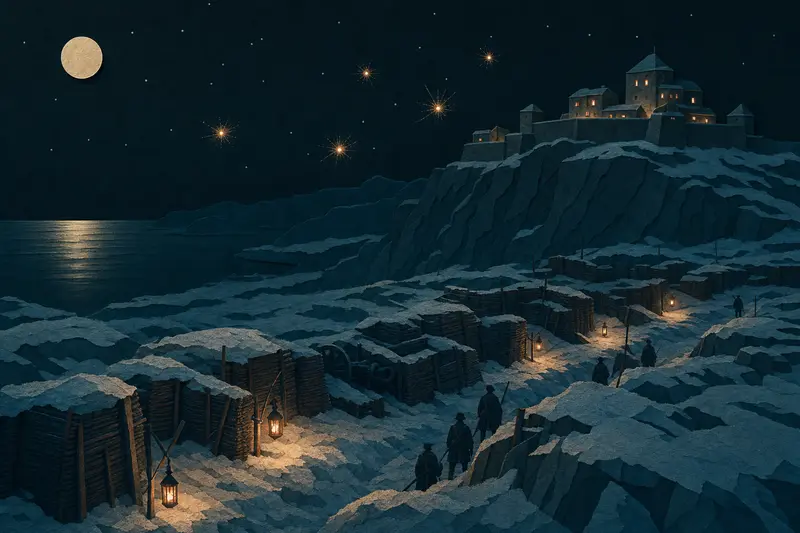
The death of Charles XII
Charles XII was shot through the head at Fredriksten in 1718. Carl O. Nordling argued from ballistics for assassination; most historians are not convinced.
6 min read -
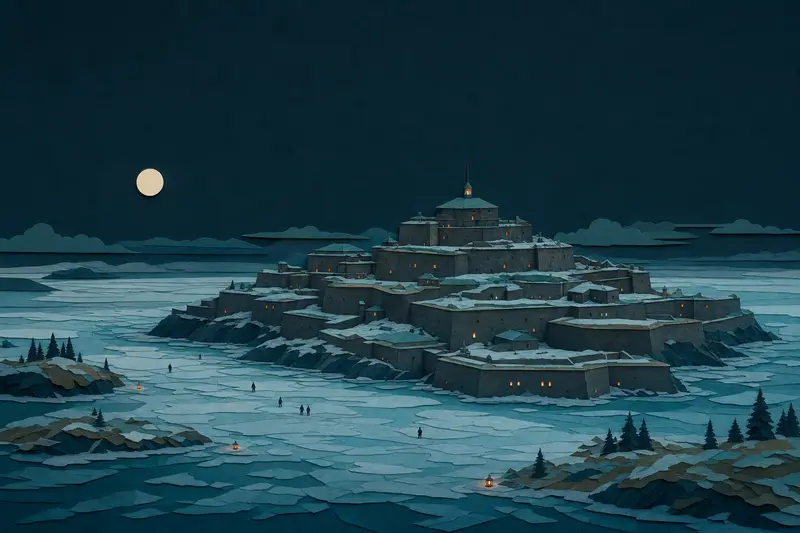
The surrender of Sveaborg, 1808
In May 1808 the sea fortress of Sveaborg off Helsinki surrendered without an assault. Carl O. Nordling argued it could have held; others blamed its design.
6 min read -

Finland's province names
Nyland and Uusimaa, Tavastland and Häme, Österbotten and Pohjanmaa: the origins of Finland's province names and Carl O. Nordling's theories about them.
6 min read -
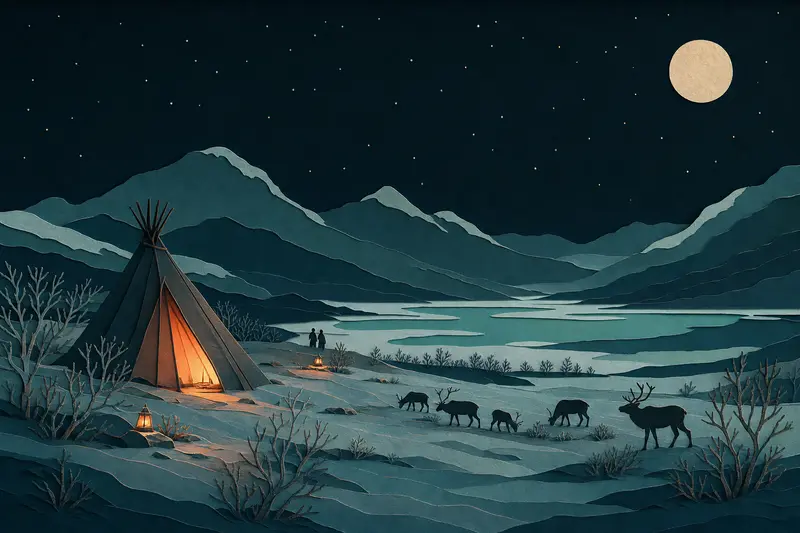
Saami genetics and language
Carl O. Nordling argued in 2000 that the Saami arose from two merged peoples. Blood groups, ancient DNA and substrate loanwords put the idea in context.
6 min read -

The Kensington runestone
A farmer found a runestone dated 1362 in Minnesota in 1898. Nordling defended it in 1957; runologists today regard it as a nineteenth-century creation.
5 min read -
The genetic mix of people in Finland
Nordling used 1970s blood-group data to split Finns and Finland-Swedes into Scandinavian, Baltic and Saami components. How does it compare with DNA?
6 min read

